Narrow the collection
The buyer filters by price, availability, body type, make, and transmission, or searches by brand and model.
A production storefront for a US used-car dealership, where a buyer can filter the live inventory, read the vehicle's real numbers, and book a test drive without phoning the lot first.
Read the case study Visit the live siteJ.A.M Dunc Enterprise LLC is a used-vehicle dealership storefront. The site leads with the current collection, lets a buyer filter and open any vehicle for mileage, transmission, fuel, and price, and routes a decided buyer into a test-drive booking or a financing enquiry.
Show the real stock publicly so buyers stop calling to ask what is available.
Let a buyer narrow to the right vehicle without scrolling the whole lot.
Make trust signals — certification, clean history, valuation, secure payment — visible beside the car.
Serve the dealership's non-English-speaking customers in their own language.
Turn browsing into a booked test drive the sales team can act on.
Shipped and running on the dealership's own domain
A simple view of how work moves through the solution, without exposing private implementation details.
The buyer filters by price, availability, body type, make, and transmission, or searches by brand and model.
Each listing opens with photos, mileage, transmission, fuel, price, and an available or sold badge.
Certification, clean history, instant valuation, and secure payment sit beside the car, with customer reviews a click away.
A decided buyer books a test drive or opens a financing enquiry, and it reaches the sales team attached to a specific vehicle.
Players never need to leave the community space they already use. The bot turns commands into clear match, profile, and leaderboard experiences directly in the channel.
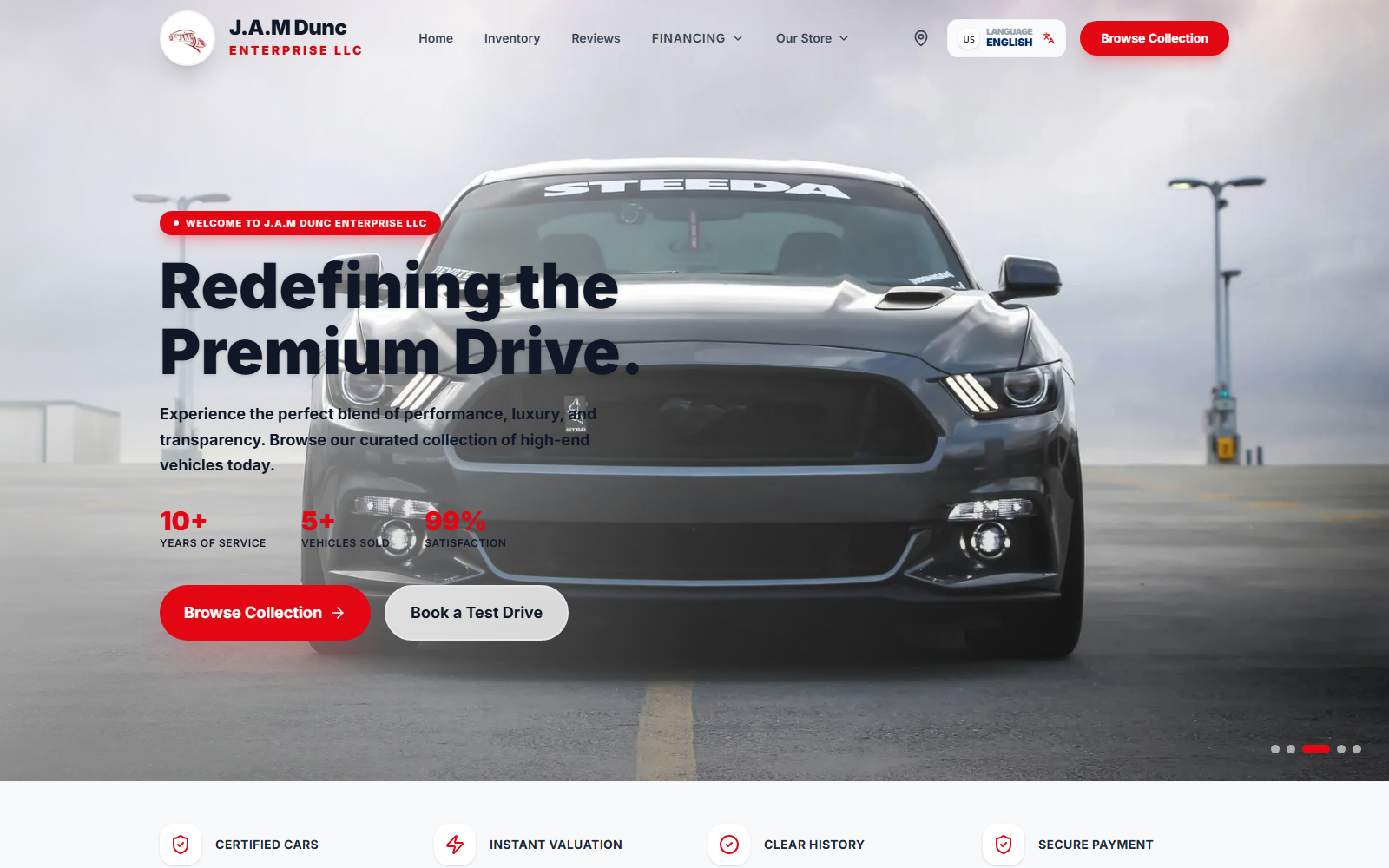
The homepage answers the first question a buyer has — what have you got — and puts browsing the collection and booking a test drive within a single click. The guarantees run underneath, where a used-car buyer's doubt actually starts.
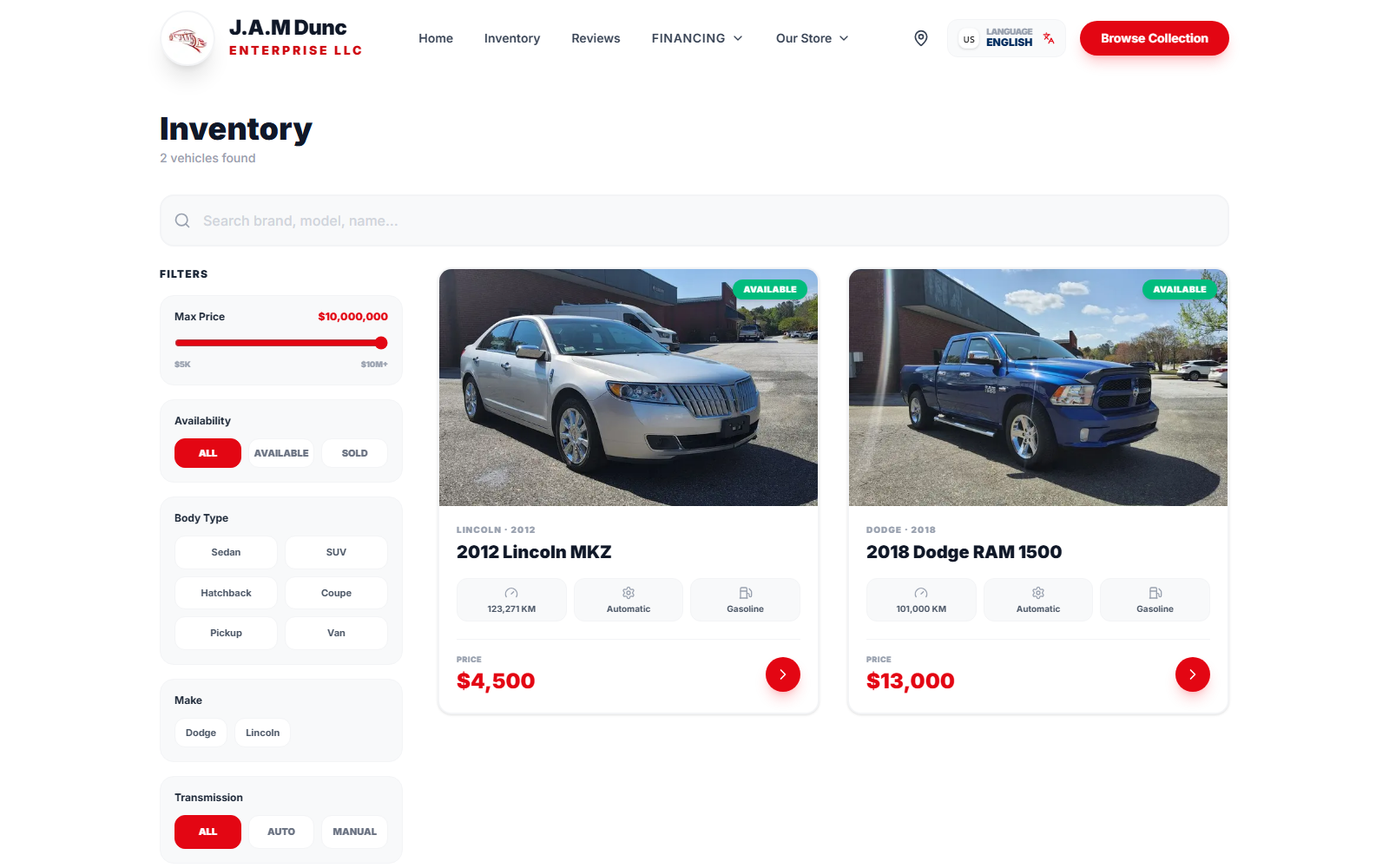
Price, availability, body type, make, and transmission narrow the stock, and every card carries the mileage, gearbox, fuel, and price up front. Sold vehicles stay listed with a badge rather than vanishing.
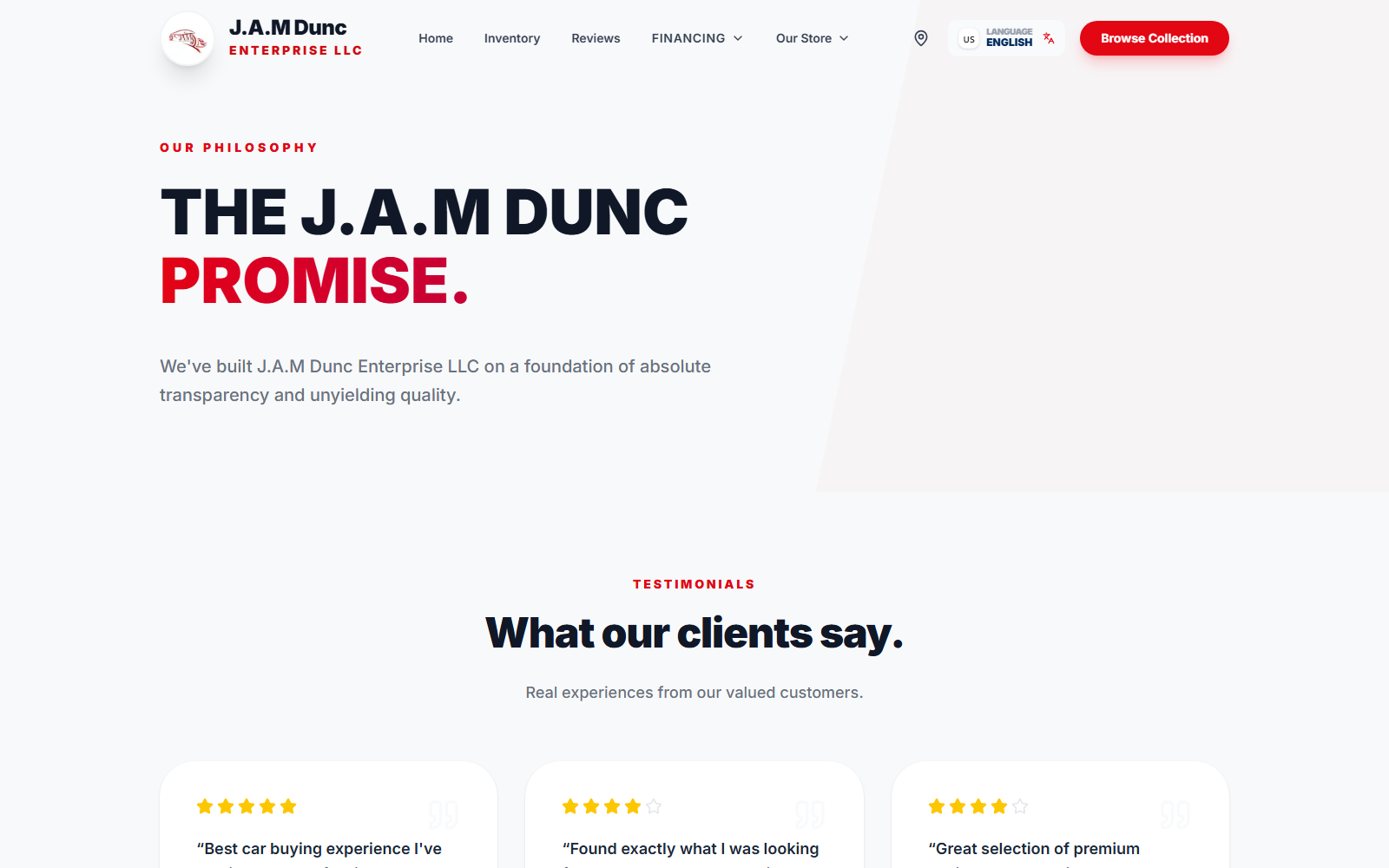
The dealership states its commitment to transparency, then hands the page over to rated customer testimonials — so the claim is followed immediately by the evidence for it.
The dealership's stock lived in spreadsheets and phone calls. A buyer could not see what was on the lot, what mileage it had, or what it cost, so every basic question became a call the sales team answered by hand — and buyers who called outside hours simply went elsewhere.
The homepage puts the collection and a test-drive booking within one action, because someone arriving at a dealership site is looking for a car, not a company history.
Price, availability, body type, make, and transmission are the questions a used-car buyer actually asks, so those became the filters rather than a generic search box alone.
Sold vehicles stay visible with a clear badge instead of disappearing. An inventory that visibly moves is evidence the dealership is active.
Certification, clean history, valuation, and payment safety appear next to the listing, so the buyer resolves doubt at the moment it appears rather than hunting for a policy page.
A built-in language switch keeps the dealership's non-English-speaking buyers on the same site instead of pushing them to machine translation.
I built and shipped the storefront end to end: the filterable inventory, vehicle detail pages, the financing, reviews and store sections, the language switch, and the test-drive booking flow — then deployed it to production on the client's domain.
The dealership has a public storefront on its own domain. Buyers arrive already knowing which vehicle they want to see, and enquiries reach the sales team as structured test-drive and financing requests instead of cold calls.
Live at www.jamduncautosalesus.com
Filterable inventory with search, price, availability, body, make, and transmission
Per-vehicle mileage, transmission, fuel, price, and availability badge
Test-drive booking and financing enquiry flows
Built-in language switching
Customer testimonials with star ratings
Some client material and implementation details remain private. The numbers, responsibilities, and outcomes shown here are limited to what can be shared and verified.